Home/Blog/Complete Baby Proofing Checklist: Room by Room
Baby Clothing
Complete Baby Proofing Checklist: Room by Room
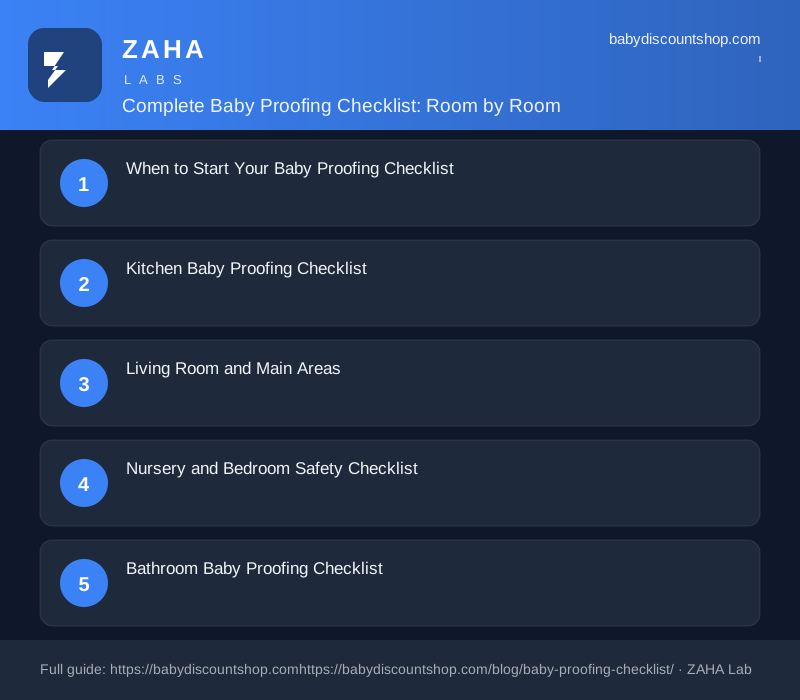
Complete Baby Proofing Checklist: Room by Room — key points at a glance
Published 17 September 2026 · updated 2026-09-17 · by Baby Discount Shop
Short answer: Baby proofing means eliminating hazards room by room before your child starts moving. This complete baby proofing checklist covers four areas: anchoring furniture, fitting cabinet latches, covering outlets, installing stair gates, and choosing safe sleep clothing with no loose parts.
Most parents baby proof after crawling starts — by then, you've already had several near-misses. Use this complete baby proofing checklist to cover every room before your baby moves: outlets, cabinet latches, furniture anchoring, and safe sleep clothing.
When to Start Your Baby Proofing Checklist
Start before your baby is born, or at the very latest by two months of age. Babies can roll off flat surfaces from around eight weeks. By four months, most roll consistently both ways. Crawling follows at six to nine months, walking at nine to fifteen months.
Walk through every room at floor level — literally get on your hands and knees — to see what a curious eight-month-old would encounter first. Electrical cords, table-leg bolts, floor-level cabinet gaps, and small objects under sofas all look very different from down there. Schedule a second walk-through when your baby starts pulling up to stand, because the reach zone roughly doubles overnight.
Kitchen Baby Proofing Checklist
The kitchen combines heat, sharp edges, heavy objects, and cleaning chemicals in one room, making it the highest-priority space on the complete baby proofing checklist.
Hazard
Recommended Fix
Under-sink cleaners and chemicals
Spring-loaded child-proof latch
Lower cabinets with breakables
Magnetic latch (harder for toddlers to defeat)
Oven door surface
Oven door lock
Stove knobs
Removable stove knob covers
Sharp cutlery drawer
Relocate to a high drawer with a lock
Trash or rubbish bin
Step-pedal bin with locking lid, or move inside a latched cabinet
Refrigerator (toddler stage)
Refrigerator door strap
Low shelves with heavy cookware
Relocate items above counter height
Fit latches on every cabinet within reach — not just those with cleaners. Heavy pots and glass bowls cause serious injury when pulled from a low shelf.
Watch Out: Spring Latches vs. Magnetic Locks
Magnetic cabinet locks are harder for toddlers to defeat than spring latches, but they require a specific magnet key to open. Lose the key and you cannot access your own cabinets. Buy a two-pack and keep one stored away from the kitchen. Standard spring latches can be defeated by a determined toddler from around 18 months.
Living Room and Main Areas
Furniture tip-overs are one of the leading causes of furniture-related injury in children under five in the US. The living room typically holds the highest concentration of that risk.
Furniture anchoring: Secure bookshelves, dressers, and TV units to wall studs with anti-tip straps. A toddler climbing an open drawer can tip a heavy unit forward onto themselves.
Electrical outlets: Fit tamper-resistant outlet covers, or replace standard outlets with tamper-resistant receptacles that have spring-loaded internal shutters. Cheap removable plastic covers can themselves become a choking hazard if a toddler pulls them free.
Window and lamp cords: Route behind furniture or through cable conduit. Window blind looped cords are a strangulation risk — replace with cordless blinds or secure loops well above reach.
Glass coffee tables: Remove or replace with a padded alternative during the crawling and early walking stage.
Stair gates: Fit a hardware-mounted gate (screwed into wall studs) at the top of every flight of stairs. Pressure-mounted gates are acceptable at the base of stairs but must never be used at the top — they can be pushed free by a toddler's weight.
Fireplace hearths: Stone and brick hearths have low, hard edges at exactly the height a falling toddler strikes. Fit a padded hearth guard or a freestanding fireguard with a secure base.
Nursery and Bedroom Safety Checklist
The nursery is where your baby sleeps unsupervised for long stretches, which is why it earns the most detailed section on any baby proofing checklist.
Safe Sleep Surface
Crib slats must be no more than 2⅜ inches apart. Cribs manufactured in the US after 2011 meet this standard; vintage pieces and some hand-me-downs may not.
The mattress must fit the crib with no more than two fingers' gap at any edge. A gap large enough for a head to enter is a suffocation risk.
Nothing in the crib except the mattress and a fitted sheet until after the first birthday — no pillows, loose blankets, positioners, or bumper pads.
Safe Sleep Clothing
What your baby wears to sleep is a direct part of nursery safety. The American Academy of Pediatrics recommends replacing loose blankets with a wearable blanket or a one-piece sleeper with no loose attachments, ties, or detachable hardware.
The Gerber Baby Unisex 2-pack 2-way Zip Textured Sleep 'N Play ($19.95) uses a two-way zip that opens from the bottom for night-time changes without fully unzipping the garment — no buttons or loose ties involved. For a multi-pack option, the Simple Joys by Carter's Baby 3-Pack Neutral Sleep and Play ($25.00) provides three full-coverage sleepers in one order, cutting down on washing frequency during the demanding early weeks.
If you want foot coverage without a separate sock that can work off overnight, the Onesies Brand Baby Girls' 4-pack Sleep 'N Play Footies Multi Pack ($18.74) builds coverage directly into the garment. The Amazon Essentials x Sofia Grainge Unisex Babies' Cotton Footed Sleep and Play One-piece Bodysuit, Pack of 2 ($22.10) is another footed option; check the closure type before buying — snaps running the full front add more small hardware to inspect at each wash.
Dress for the Room, Not the Calendar
The safe sleep rule of thumb is one more layer than an adult would wear comfortably at the same room temperature. At 68–72°F, a long-sleeve cotton one-piece sleeper is usually sufficient. Use a tog-rated sleep sack rather than adding a loose blanket if the room runs cool at night.
Other Nursery Hazards
Baby monitor cords: Keep the monitor at least three feet from the crib and route any power cord behind furniture.
Changing table: Use the safety strap every single time and keep one hand on the baby. Never turn away, even for a second.
Window blind cords: Apply the same rule as the living room — no looped cords anywhere a child can reach.
Wardrobe and tall dressers: Anti-tip strap to a wall stud, same as the living room furniture.
Bathroom Baby Proofing Checklist
Water temperature: Set your water heater to 120°F (49°C) or below. At higher temperatures, a child sustains a serious scald within seconds of contact.
Toilet lid lock: Infants and young toddlers can drown in very shallow water. A latching toilet lock addresses this and stops older toddlers from dropping items in.
Bath mat: Non-slip mat inside and outside the tub, every time.
Medicine storage: Move all medications, vitamins, and supplements to a high, locked cabinet. Child-resistant caps slow access — they do not prevent it.
Outlets near the sink: Fit GFCI-protected outlet covers on every bathroom outlet.
Cosmetics and razors: Store inside a locked cabinet, not on the sink edge or in a low drawer.
Safe Baby Clothing as Part of Your Baby Proofing Checklist
Clothing safety is often overlooked in baby proofing guides, but the wrong garment introduces real risks. Loose buttons are a choking hazard. Drawstrings on children's hoods are a strangulation risk and are banned on infant and toddler clothing under US federal law — yet some imported garments still carry them. Ill-fitting clothing can restrict movement during early rolling and crawling.
For everyday bodysuits, look for snap-closure designs with no small detachable trim or decorative hardware. The Simple Joys by Carter's Baby Boys Long-Sleeve Bodysuit Pack of 5 ($18.00) gives five long-sleeve options in a single order; check the snap quality on receipt. The Simple Joys by Carter's Baby Girls 6 Pack Short Sleeve Bodysuit ($20.00) is the short-sleeve equivalent for warmer weather.
The Gerber Baby Girls' 8-pack Short Sleeve Onesies Bodysuits ($24.95) is one of the most generous pack sizes on this page. Eight garments suit the newborn stage when outfit changes can reach three or four per day. At the lowest price point, the Amazon Essentials Unisex Toddlers and Babies' Long-Sleeve Cotton Ribbed Henley Bodysuits, Pack of 2 ($6.63) uses a stretchy ribbed henley neck designed to stretch over a newborn's head without pressure, with minimal hardware throughout.
When checking any garment:
Look for loose buttons, decorative beads, or embroidery pieces that can detach — these are choking risks for children under three.
Check for hood drawstrings — absent on any compliant infant or toddler garment sold in the US.
For sleepwear specifically, check the fit: US federal law requires children's sleepwear either fits snugly or uses flame-resistant fabric. Snug-fit styles skip the chemical treatment.
How We Chose These Picks
Every garment on this page carries a minimum 4.7-star rating. We selected multi-pack formats throughout because the newborn stage involves multiple outfit changes daily, and buying in bulk keeps the per-garment cost low and reduces how often you run a wash. All prices shown are under $25. We chose only snap or zip closure styles — no loose buttons that can detach to become a choking hazard, and no drawstrings on any item.
Who This Checklist Suits — and Who Can Skip Some Steps
This complete baby proofing checklist is designed for homes with children from birth through approximately 24 months. If your baby is not yet rolling, you can defer stair gate installation and lower-cabinet latches — but do not defer furniture anchoring, safe sleep setup, or water heater temperature adjustment. Those three areas matter from the first day home.
Good fit: first-time parents setting up a home before the birth; parents moving to a new property with a crawling or walking toddler; grandparents preparing for regular visits from young grandchildren.
Can reasonably skip some steps: single-storey homes with no stairs (skip stair gates); homes with no glass furniture or stone hearth (skip those specific guards).
Do not skip for any child under two: furniture anchoring, outlet covers, water heater temperature, and safe sleep clothing. These four areas account for a disproportionate share of preventable infant injuries in the US, and none require significant expense to address.
Our picks
Simple Joys by Carter's Baby Boys Long-Sleeve Bodysuit Pack of 5Bodysuit
Start before your baby is born, or by the time they reach two months old. Babies can roll off flat surfaces from around eight weeks, so sleep surface setup and furniture anchoring matter from day one. Crawling typically begins at six to nine months, so the full checklist — cabinet latches, outlet covers, stair gates — should be in place well before that stage.
What should a baby wear to sleep safely?
The American Academy of Pediatrics recommends a one-piece sleeper or wearable blanket with no loose blankets, pillows, or positioners in the crib until after the first birthday. Look for 100% cotton, snug-fitting styles with zip or snap closures and no detachable buttons. The Gerber 2-way Zip Sleep 'N Play and Simple Joys by Carter's Sleep and Play packs are examples of what a safe sleep garment looks like.
What is the most important step on the baby proofing checklist?
Furniture anchoring and safe sleep setup are the two highest-priority tasks. Unsecured bookshelves and dressers are a leading cause of furniture-related injury in children under five — tip-overs are dangerous and entirely preventable with anti-tip straps. For infants, a safe sleep environment — firm mattress, no loose items in the crib, appropriate sleepwear — directly addresses known SIDS risk factors. Both can be done before your baby comes home.
Do I need to baby proof before my baby can crawl?
Yes. Three hazards apply from birth regardless of mobility: the sleep surface (nothing loose in the crib), hot water temperature (set the water heater to 120°F or below), and furniture anchoring (relevant whenever an older child or toddler visitor is in the home). The remaining steps — cabinet latches, outlet covers, stair gates — should be completed before six months to give you a comfortable buffer before crawling begins.
As an Amazon Associate we earn from qualifying purchases. Prices and availability are accurate as of the date shown and are subject to change — the price on Amazon at checkout is the one that applies.